


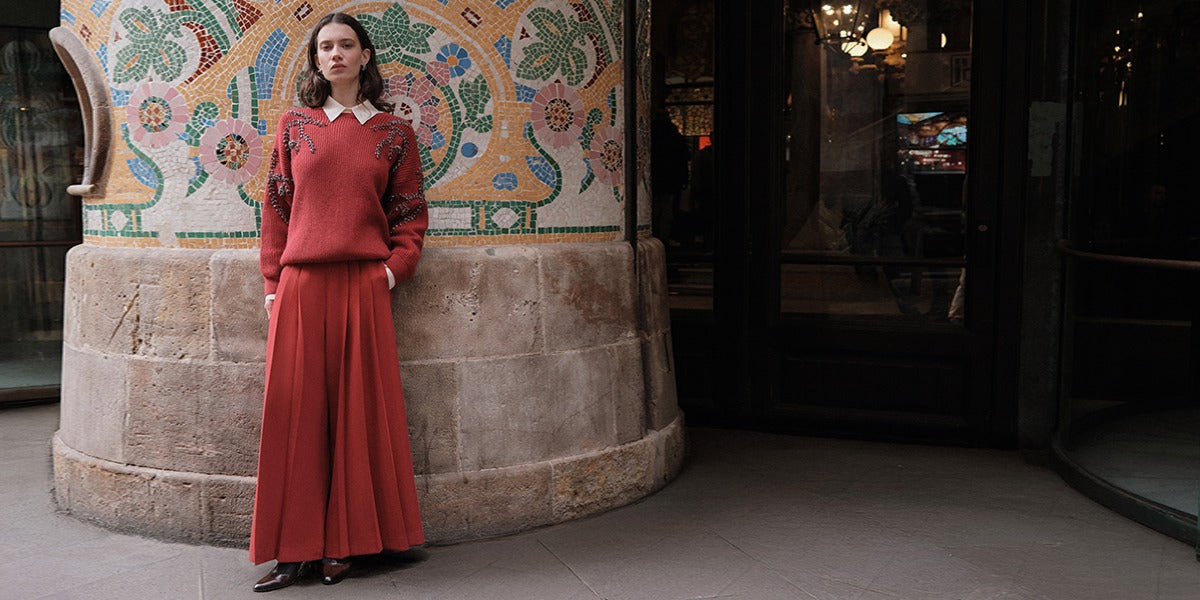
Monochrome Dressing for Women: The Minimalist Formula That Always Looks Elevated
Monochrome dressing has a reputation for looking effortlessly expensive, and for good reason. When an outfit stays within one color family, it instantly feels more deliberate. There is visual continuity, less clutter, and a stronger sense of shape. Even simple garments begin to look more refined because the eye is drawn to proportion and texture rather than noise.
But monochrome dressing is not simply wearing one color from head to toe and hoping it works. The most elegant monochrome looks rely on variation within the palette. They play with depth, contrast, and finish. That is what prevents the outfit from feeling flat or severe.
For women who want to simplify dressing while still looking polished, monochrome is one of the most reliable formulas. It works across tailoring, knitwear, skirts, denim, and dresses, and it gives everyday pieces a stronger editorial presence.
Why Monochrome Always Looks Polished
The reason monochrome feels elevated is because it creates coherence. A color story that stays focused appears intentional even when the outfit itself is quite simple. A soft knit with tailored trousers looks more sophisticated in matching tones than in unrelated shades. A shirt and skirt combination feels more resolved when both pieces speak the same color language.
Monochrome also elongates the silhouette. When the eye is not interrupted by strong color breaks, the body appears longer and the outfit appears calmer. This is particularly effective with wide-leg trousers, longer skirts, and softly structured dresses because the lines of the garment can be appreciated more fully.
Most importantly, monochrome allows subtle details to stand out. The drape of crepe, the neatness of a cuff, the clean shoulder line of a blazer, or the texture of knitwear all become more visible when color is not competing for attention.
Start With a Color Family, Not a Single Exact Shade
One of the easiest mistakes in monochrome styling is trying to match everything too precisely. A better approach is to work within a family of tones. Cream can sit with bone, soft beige, and ecru. Navy can work with inky blue, washed indigo, and deep charcoal. Brown looks richer when it is layered with camel, cocoa, or taupe instead of repeated exactly.
This approach makes the outfit feel dimensional. It also makes dressing far more practical, since a real wardrobe rarely contains identical shades across every category. Your women's tops, outer layers, and accessories can all live in the same tonal world without needing to match perfectly.
Choosing the right family should also reflect mood. Black and charcoal feel sleek and metropolitan. Cream and beige feel soft and quiet. Navy feels classic and strong. Brown can feel warm and luxurious. Once you decide the mood, the rest of the outfit becomes easier to build.
Texture Is What Keeps the Look Alive
If monochrome ever feels dull, texture is usually the missing ingredient. A matte knit paired with fluid trousers, a crisp cotton shirt against a softly structured skirt, or a crepe blazer over a smooth top creates the kind of contrast that makes one-color dressing feel rich.
This is where fabric choice matters more than quantity. You do not need many components when the materials are doing something different from one another. Even a simple look becomes compelling when one piece has softness, one has structure, and one has movement.
Try pairing a slim top with fuller skirts and shorts, or a textured knit with clean pants and denim. The color remains consistent, but the surfaces introduce visual interest. That is the foundation of elegant monochrome.
Let Shape Do the Work
Monochrome styling succeeds when proportion is considered carefully. Because the color palette is quieter, the shape of the outfit becomes more important. A wide-leg trouser needs either a defined waist or a cleaner top. An oversized shirt may need a slimmer lower half or a front tuck. A midi skirt with movement often benefits from a sharper shoulder or a shorter knit.
This does not mean every look must be formal. It simply means the silhouette should feel deliberate. If one part of the outfit is relaxed, another part should introduce clarity. That balance gives monochrome its modern edge.
Length is another powerful tool. A longer line, such as a blouse under a blazer with a matching trouser, can feel especially elegant because the eye reads it as one connected statement. For a softer look, allow the hem of a shirt or cardigan to create a slight break while keeping the palette consistent.
Use Accessories as Quiet Contrast
Accessories should support monochrome, not disrupt it. Shoes, belts, and bags can stay tonal for a fully elongated effect, or they can introduce a small contrast to add tension. The important point is restraint. One subtle interruption is often more effective than several loud ones.
Metallic jewelry works especially well because it adds light without changing the color story. A structured bag can add polish through shape alone. A shoe in suede or patent can shift the mood of the outfit even if it remains in the same tonal family.
Easy Monochrome Formulas to Repeat
If you want monochrome dressing to become practical rather than occasional, rely on formulas. A knit and trouser in related tones is an easy weekday look. A shirt, midi skirt, and blazer in varying neutrals creates a stronger, more tailored presence. A dress with a matching outer layer feels refined with very little effort.
Monochrome is powerful because it removes unnecessary decisions while still delivering impact. It proves that simplicity does not have to feel plain. When tone, texture, and silhouette are handled with intention, one-color dressing becomes one of the most elegant tools in a modern wardrobe.