


The Drop-Shoulder Dress: How to Style 2026's Softest Tailoring
Most fashion advice focuses on what the waist is doing. The more interesting decision in 2026 is happening at the shoulder. The drop-shoulder dress moves the structural conversation upward, and it's quietly become one of the most-worn silhouettes of the year.
The cut is exactly what it sounds like. The shoulder seam falls below the natural shoulder line, usually by an inch or two, sometimes more. The effect softens the upper body, adds drape through the sleeve, and lets the dress move with the body rather than holding rigidly against it. After several seasons of structured tailoring and sharp shoulder lines, the drop-shoulder reads like a relief.
Drop-Shoulder vs. Drop-Waist (Two Cuts That Get Confused)
The vocabulary trips people up. Drop-shoulder and drop-waist are entirely different decisions on a garment, and confusing them leads to buying the wrong dress online.
Drop-shoulder relocates the shoulder seam downward. The waist stays where it normally would. The change happens at the top of the dress.
Drop-waist relocates the waist seam downward to the hip. The shoulder stays where it normally would. The change happens at the middle of the dress.
A drop-shoulder dress can have any waistline (fitted, belted, dropped, empire). A drop-waist dress can have any shoulder construction. The two terms describe different parts of the same garment.
For the broader picture of how softening silhouettes are reshaping the season, our overview of 2026 spring/summer trends worth investing in covers where this fits into the year's editorial direction.
Why It Flatters More Body Types Than You'd Expect
The drop-shoulder is one of the more democratic cuts in modern dressing. The seam placement does a few useful things at once.
For broader shoulders, the dropped seam softens the line and removes the visual emphasis a structured shoulder would create. The shoulder no longer reads as the widest point.
For narrower shoulders, the slightly extended fabric creates the illusion of presence without adding actual width. The drape fills out the upper body without changing the actual measurement.
For curvier frames, the loose upper construction balances a more defined lower silhouette. A drop-shoulder dress with a fitted waist or belt creates a clear hourglass without restricting the upper body.
For longer torsos, the drop-shoulder visually shortens the upper body slightly, which can balance overall proportion. For shorter torsos, the cut may not be the most flattering choice unless the dress has a defined waistline to break up the upper section.
Exquise's Drop-Shoulder Pieces
Exquise has built drop-shoulder into four distinct dress hands this season, and each one solves a different styling problem. Knowing the differences makes online shopping considerably easier.
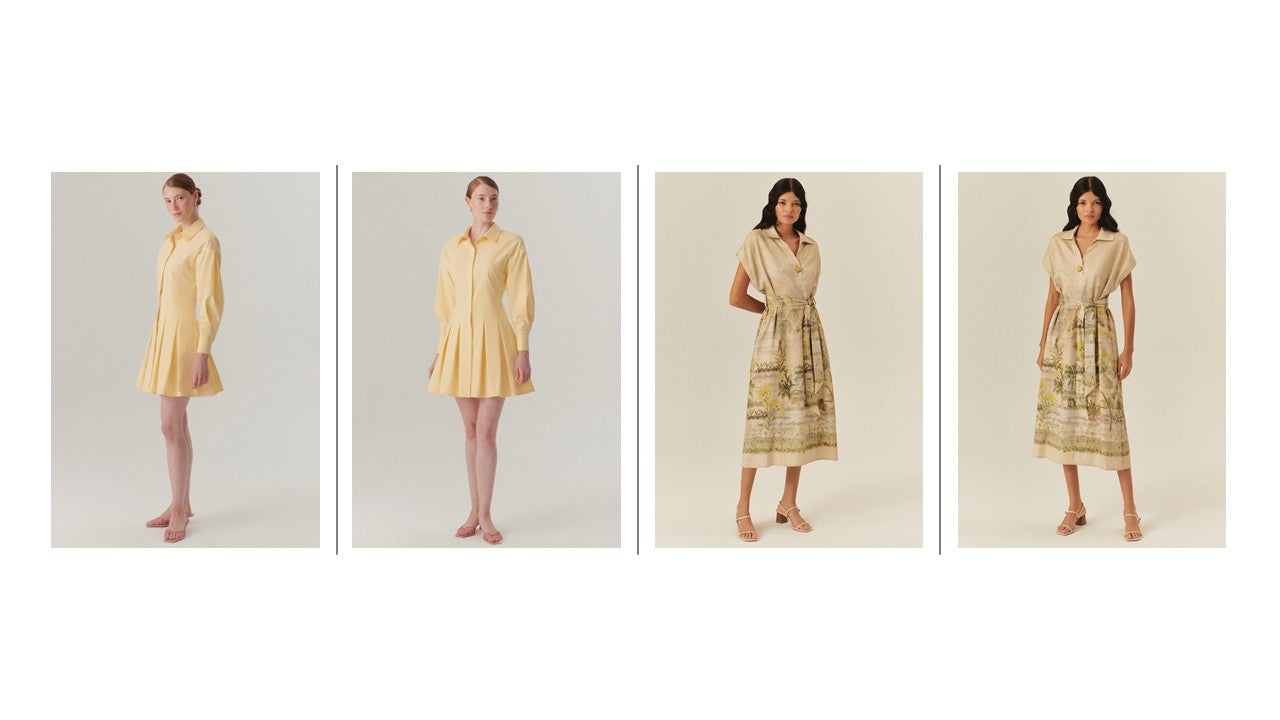
The Finley Pleated Dropped Shoulder Mini Shirt Dress is the most playful option. The pleated detail at the body adds movement, and the shirt-dress construction gives it a tailored anchor. The mini length reads younger and works particularly well for warm-weather brunches, garden lunches, and informal evening events. If you'd like context on how shirt dresses build into a wardrobe more broadly, our shirt dress styling guide covers the broader category. Finley lives in the Exquise's mini dress edit.
The Jream Midi Dress is the most versatile of the four. Drop-shoulder construction paired with a fitted waist creates a balanced silhouette that handles workwear, dinners, and informal occasions without adjustment. This is the piece that justifies its closet space across the most number of scenarios.
The Samantha Midi Dress brings a belt into the equation, which sharpens the waist definition further. The belt makes Samantha read slightly more formal than Jream, which puts it firmly in dinner-and-evening territory.
The Matilda Midi Dress is the closest cousin to Samantha but with a slightly different cut through the body. Matilda reads marginally more relaxed and works well for daytime occasions where you still want polish without veering into formal.
Jream, Samantha, and Matilda all live in the midi and maxi dress collection alongside other day-to-night pieces.
Three Styling Scenarios
For daytime, the drop-shoulder dress wants very little around it. A flat sandal, a small leather bag, a single piece of jewelry. Skip the structured layers. The dress's softness is the point, and adding sharp lines on top fights the silhouette rather than supporting it. Hair pulled back loosely reads more in tune with the cut than a sharp blowout.
For evening, the same dress shifts considerably with a heeled sandal or pump and a more deliberate jewelry choice. A defined earring works better than a layered necklace because it draws the eye upward toward the softened shoulder line rather than down across the bodice. A small structured clutch or a fine chain-strap bag finishes the look.
For workwear, the question is whether the dress's existing belt should stay or come off. A belted drop-shoulder dress reads sharper and more tailored, which suits most office environments. An unbelted version reads softer and works well for creative workplaces or days when you want presence without rigidity.
The Belt Question
Three of the four pieces (Jream, Samantha, Matilda) come with built-in belts or are designed to be worn with one. Whether you actually wear the belt is a real styling choice, not an afterthought.
Wearing the belt sharpens the waist and creates a more architectural silhouette. The dress reads more deliberate. This is the version most photographers prefer and most occasion-dressing demands.
Skipping the belt lets the dress hang in its full drape. The silhouette becomes softer, longer, and more relaxed. This version reads better for casual settings and for warmer weather where any waist constriction reads heavy.
The mistake to avoid is moving the belt to a position other than the natural waist. The dress is designed for the belt to sit at a specific point. Repositioning it (especially to the high hip in an attempt to drop-waist a drop-shoulder dress) breaks the silhouette entirely.
Length and Fit Notes
Mini drop-shoulder dresses suit warmer weather and skew younger in tone. The Finley is the standout option here. Pair with flat sandals in spring and summer; transition to ankle boots in early fall.
Midi drop-shoulder dresses are more versatile across seasons and occasions. Jream, Samantha, and Matilda all sit in this length, which makes them better candidates if you're investing in one drop-shoulder piece that will work across the calendar.
For petite frames, the drop-shoulder needs slightly more attention. The dropped seam can sometimes read as oversized rather than intentional on shorter frames. A belted version helps; the waist definition prevents the dress from reading too loose overall. A midi length hitting just below the knee usually flatters more than a longer midi that hits mid-calf.
For taller frames, all four pieces work consistently. The dropped seam reads as design intent rather than fit issue, and the dress's proportions translate well across height.
What to Layer Over It
The drop-shoulder dress complicates outerwear more than most cuts. The dropped seam doesn't pair well with structured shoulder pieces because the lines compete.
A soft duster coat or a longline cardigan works well. The relaxed outer layer matches the dress's overall softness, and the longer length preserves the dress's drape.
A trench coat works as long as the trench has a relaxed shoulder construction rather than a sharp one. The classic belted trench in a slightly oversized cut is the most reliable pairing.
A cropped jacket or a structured blazer fights the silhouette. The sharper outer shoulder creates visual conflict with the dropped inner shoulder, and the cropped length cuts the dress's line in an awkward place. If you want a jacket, choose something longer and softer.
For cooler venues where you need a layer indoors, a fine knit cardigan in a coordinating tone works well. A pashmina or large scarf draped over the shoulders reads more elegant than a structured jacket and preserves the dress's softness.
What to Avoid
A few choices consistently undercut the look.
A heavy cross-body bag worn diagonally cuts across the drop-shoulder line and fights the silhouette. A small shoulder bag or a clutch reads cleaner.
Statement shoulder pads in any layer on top. The drop-shoulder's softness depends on nothing competing with it. A vintage 1980s blazer over a drop-shoulder dress creates a confused silhouette.
Pulling the dress higher on the shoulder than it's designed to sit. Some women instinctively try to "fix" the dropped seam by pulling it up to the natural shoulder. The dress is designed to sit lower; pulling it up bunches the fabric and ruins the line.
Heavy embellished necklaces. The drop-shoulder already creates visual interest at the upper body. Adding decorative weight there competes for attention.
Why This Cut Will Outlast the Trend
The drop-shoulder isn't a single-season silhouette. The construction has appeared and reappeared across decades, and the current version reads modern enough to outlast the spring 2026 conversation around it.
What makes the cut durable is its forgiveness. A fitted dress requires the body to match it exactly. A drop-shoulder dress is built to accommodate movement, weight fluctuation, and different proportions. The piece you buy this year fits next year without alteration.
If you're investing in one new dress this spring, a midi drop-shoulder with a defined waist (Jream is the most versatile entry point, Samantha if you want more formality) is one of the most useful additions to a closet that already has the standard categories covered. The shape solves real wardrobe problems rather than just adding another option to a crowded category. Browse the full dresses and jumpsuits collection to see the cut in context.