


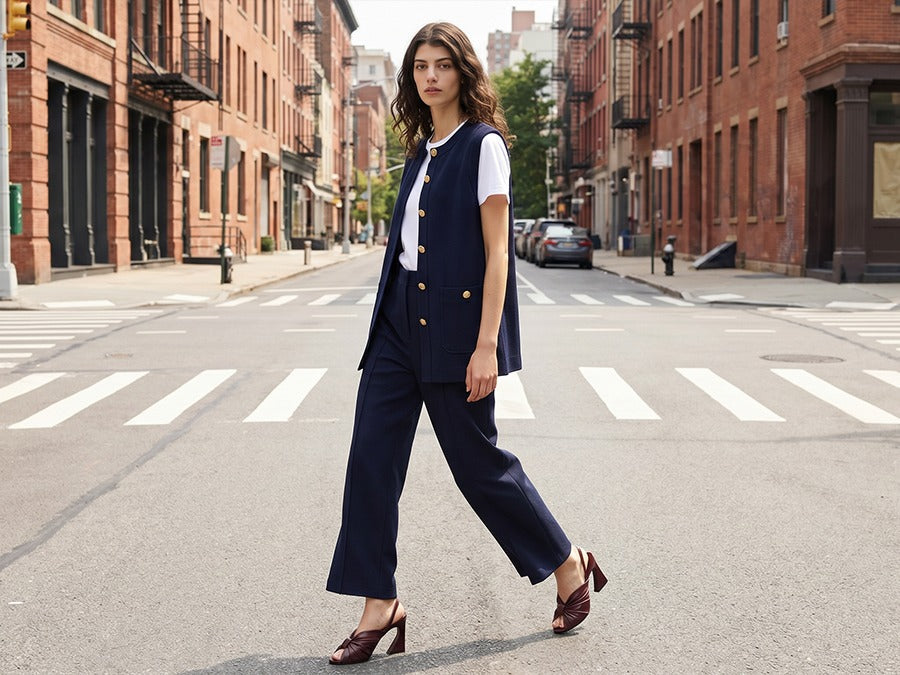
The New Feminine Tailoring: How to Wear Vests, Wide-Leg Pants and Soft Blazers
Tailoring has always signaled polish, but the way women wear it now feels noticeably different from the rigid formulas of the past. The new mood is softer, more fluid, and more personal. Structure is still important, yet it no longer depends on stiffness. Instead, modern tailoring creates presence through clean lines, elegant proportion, and garments that move with the body rather than against it.
This is where feminine tailoring becomes especially compelling. It does not reject classic tailoring codes. It refines them. It introduces fluid trousers instead of severe suiting pants, relaxed blazers instead of hard shoulders, and vests that feel sleek rather than severe. The result is a wardrobe that still looks intelligent and composed, but feels easier to live in.
If your style leans toward sophistication with flexibility, feminine tailoring is one of the strongest directions to build around.
What Feminine Tailoring Means Now
Feminine tailoring is less about overtly romantic details and more about balance. It softens classic menswear-inspired pieces through drape, proportion, and styling. A blazer may still be sharp, but the fabric is lighter. A trouser may still be tailored, but the leg is wider and more fluid. A vest may still feel structured, but it sits closer to the body and can be styled on its own instead of only as part of a suit.
This approach works because it allows strength and softness to exist together. The clothes retain clarity, but they never feel heavy. That balance is what makes the silhouette look modern rather than strict.
Color contributes as well. Neutrals such as black, cream, navy, beige, and soft brown reinforce the quiet sophistication of tailoring, while subtle color accents keep it from becoming too formal or repetitive.
Start With the Vest
Tailored women's vests are one of the clearest expressions of modern feminine tailoring. Worn alone, they create a clean, sculpted line that feels both strong and elegant. Layered over a blouse or under a blazer, they add depth without excess bulk.
The vest works best when the rest of the outfit respects its precision. Pair it with fluid trousers for contrast, or with a skirt if you want a softer silhouette. Keep accessories restrained so the sharpness of the cut remains the focus.
A vest is especially effective for transitional dressing because it provides structure without the weight of a full jacket. That makes it ideal for days when you want tailoring to feel lighter and more adaptable.
Let Wide-Leg Pants Create Movement
The wide-leg trouser is essential to this new tailoring language. Pieces from pants and denim with a cleaner line and generous leg shape create elegance through movement. They lengthen the silhouette, add ease, and make tailoring feel less rigid overall.
The success of wide-leg styling depends on balance. A narrower top, a defined waist, or a cropped vest helps the line feel intentional. The goal is not volume everywhere. The goal is to let movement exist alongside clarity.
Wide-leg trousers are also one of the easiest ways to make tailoring feel less corporate. Even when paired with a blazer, they carry a softer energy than slim-cut suiting, which is precisely what makes them so current.
Choose a Soft Blazer, Not a Hard One
A blazer remains central to tailoring, but the mood changes dramatically when the cut becomes a little more relaxed. Softer jackets and blazers feel fluid enough to wear over dresses, knitwear, or tailored separates without forcing the look into office territory.
This softer blazer should still have shape. The shoulder must feel intentional, the lapel should sit well, and the length should relate properly to the rest of the outfit. But the fabric can drape more, the styling can loosen, and the overall impression can feel more effortless.
That is the key difference between traditional suiting and feminine tailoring. The garments are still precise, but they are not immovable.
How to Balance Softness and Structure
Feminine tailoring works best when one part of the look carries authority and another brings ease. A vest with fluid trousers. A blazer over a soft dress. A tailored trouser with a lighter knit. This contrast prevents the outfit from feeling either too formal or too undone.
Accessories should support that balance. Pointed flats, slim belts, delicate jewelry, and structured bags all add polish without hardening the look. Footwear can completely shift the message: a heel sharpens the line, while a sleek flat keeps it grounded and wearable.
Texture also helps. Crepe, fluid suiting fabrics, fine knits, and matte cottons all make tailoring feel richer. When those textures work together, the outfit gains depth even within a restrained palette.
Why This Approach Feels So Modern
The appeal of feminine tailoring lies in its adaptability. It offers the confidence associated with classic tailoring, but it responds to contemporary life more realistically. Women want polish, but they also want movement. They want elegance, but not stiffness. They want clothes that can transition across different settings without requiring a costume change in between.
That is exactly what this softer style of tailoring delivers. It makes room for individuality, comfort, and ease while preserving the beauty of clean lines and refined construction. In that sense, feminine tailoring is not a passing variation on suiting. It is the natural evolution of it.